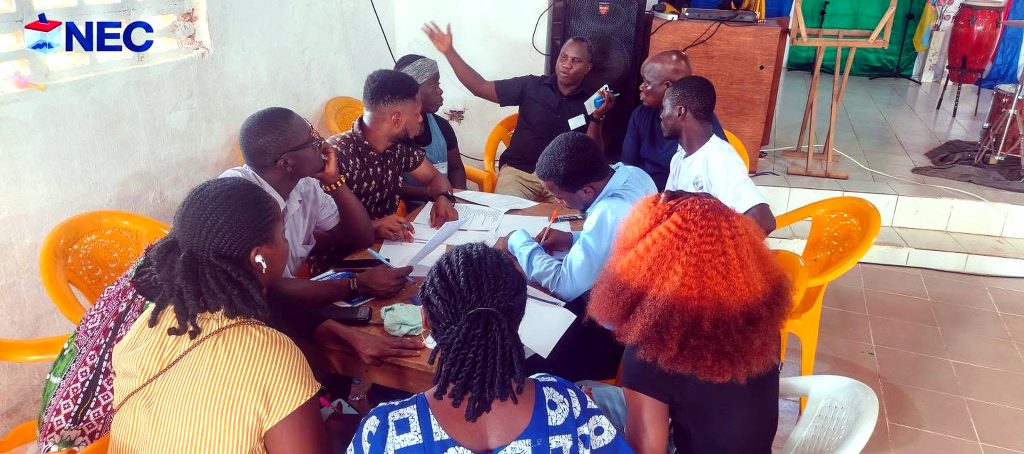
Regional consultation in Harper urges wider outreach, accessible information, and stronger community partnerships
HARPER, Maryland County – 23 October 2026
Stakeholders from Maryland, River Gee, Grand Gedeh, and Grand Kru Counties are calling for civic and voter education that reaches beyond urban centers and gives every citizen a fair opportunity to understand and participate in Liberia’s electoral process ahead of the 2029 General Elections.
Participants made the call in a resolution adopted Friday, 23 October 2026, at the close of the final phase of the National Elections Commission of Liberia’s Regional Stakeholder Consultation on the Civic and Voter Education Strategy for 2026–2030 in Harper, Maryland County.
Under the theme “Building an Informed, Participatory, Inclusive and Engaged Citizenry for Sustainable Democracy,” stakeholders stressed that credible elections depend not only on election-day arrangements, but also on sustained public understanding, trust, and meaningful participation throughout the electoral cycle.
Participants identified inadequate funding, limited transportation, shortages of educational materials, communication barriers, and weak community-level outreach as major obstacles to delivering effective civic and voter education, particularly in remote and hard-to-reach communities.
They also raised concerns about the limited inclusion of women, young people, and persons with disabilities, urging the NEC to ensure that electoral information and educational activities are accessible, relevant, and responsive to different community needs.
To bring civic education closer to citizens, the resolution recommends establishing and adequately resourcing Electoral District Civic and Voter Education Cells.
These local structures would help decentralize educational activities and strengthen the presence of civic educators across communities.
Stakeholders called on NEC Liberia to use a multilingual and multi-channel communication approach so that people can receive accurate, timely, and non-partisan electoral information in languages and formats they understand.
Recommended outreach methods include local vernaculars, community radio, town criers, town-hall meetings, face-to-face discussions, and social media.
Participants emphasized that combining traditional and digital channels can help reach people with different levels of access to technology and formal information sources.
Disability inclusion was identified as an essential part of an effective civic education strategy.
Stakeholders called for deliberate steps to make information and activities accessible to people with disabilities and to remove barriers that can prevent them from taking part in electoral and democratic processes.
Young people and educational institutions were also placed at the center of the proposed strategy.
Participants recommended establishing Civic and Voter Education Clubs in schools to help students learn about citizenship, electoral rights, responsibilities, and peaceful democratic participation.
Suggested school-based activities include peer-to-peer education, intellectual forums, talent shows, and other interactive initiatives designed to make civic learning engaging and relevant to young people. Stakeholders also proposed partnerships with the Ministry of Education and other appropriate institutions to support these efforts.
The resolution further calls for stronger cooperation among NEC, civil society organizations, traditional and community leaders, faith-based institutions, media practitioners, and development partners.
Participants said coordinated action can reduce duplication, extend outreach, and build stronger community ownership of civic education.
Stakeholders underscored the importance of political neutrality in all civic and voter education activities.
They urged that messages remain factual, balanced, and free from partisan influence so citizens can make informed decisions independently.
Participants called on the NEC, through its Department of External Relations and Civic and Voter Education Section, to implement the 2026–2030 strategy continuously and inclusively, with plans shaped by the realities, languages, and needs of communities across Liberia.
Reliable funding, adequate transport, relevant educational materials, and stronger coordination were highlighted as practical requirements for turning the strategy’s recommendations into sustained action. Stakeholders stressed that community outreach must be planned and supported, rather than limited to short periods before elections.
As the consultation concluded in Harper, participants reaffirmed their commitment to improving public understanding of electoral processes and widening opportunities for citizens to participate.
They emphasized that reaching underserved communities and including persons with disabilities, women, and young people are important steps toward a more informed and participatory democracy ahead of 2029.
#
Related Articles
NEC Liberia, Political Parties and Partners Convene to Advance Women’s Representation and Inclusive Political Participation
Oct 23, 2026
NEC Liberia Begins Final Leg of Regional CVE Strategy Consultations in Harper
Oct 22, 2026
NEC Liberia to Submit US$72 Million Budget for 2029 Elections, Inducts New Executive Director
Oct 21, 2026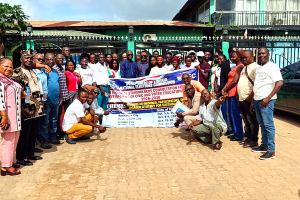
Comments 0