Regional resolution urges sustainable funding, community-based education, and wider access to electoral information
ROBERTSPORT, Grand Cape Mount County, Friday, 8 October 2026
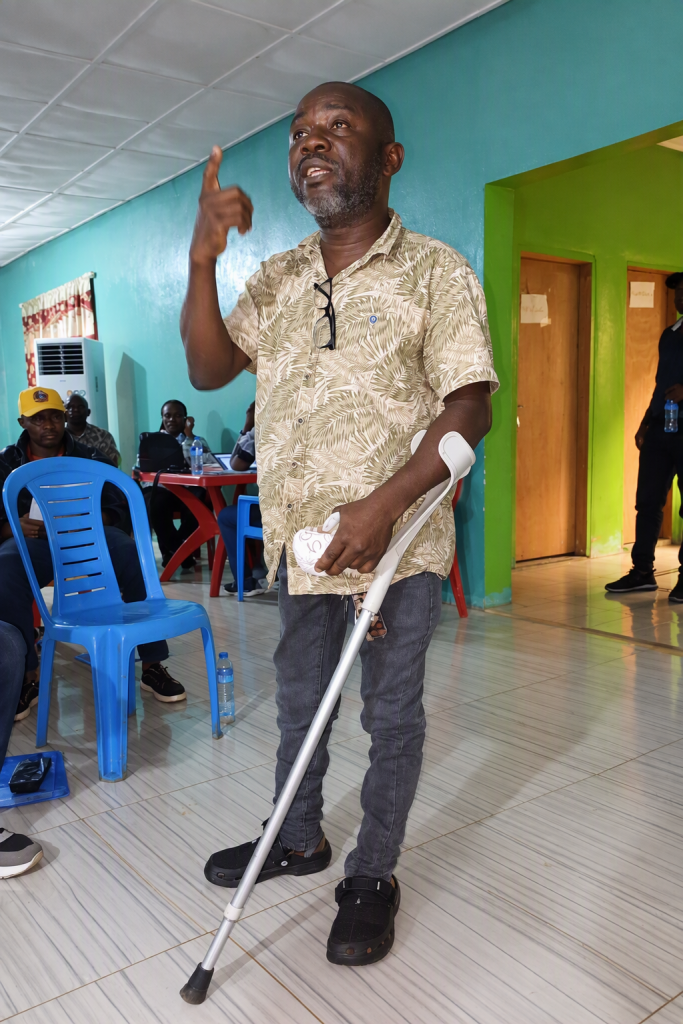
Stakeholders from four counties in western Liberia have called for sustainable funding, continuous civic education, and broader community outreach to strengthen public participation in elections and help citizens make informed electoral decisions.
Participants made the call in a resolution adopted during the Western Regional Civic and Voter Education Strategy Consultation held in Robertsport, Grand Cape Mount County.
Representatives from Lower Montserrado, Bomi, Gbarpolu, and Grand Cape Mount Counties examined lessons from the 2023 electoral process and proposed practical measures for inclusion in the National Elections Commission of Liberia’s Civic and Voter Education Strategy for 2026 to 2030.
Participants urged NEC Liberia and its partners to incorporate the recommendations into the strategy and its costed implementation framework, giving civic and voter education a more consistent place throughout the electoral cycle.
Stakeholders said predictable funding is essential to sustain education activities beyond election periods and to ensure that communities receive reliable information well before voters go to the polls.
They also emphasized the need to train community based educators, provide adequate learning materials, and strengthen decentralized structures serving counties, districts, schools, and local communities.
To ensure that civic education reaches every segment of society, participants called for targeted outreach to women and girls, young people, first time voters, persons with disabilities, and other groups that can face barriers to electoral information and participation.
Belleh, Komba, Gola Konneh, and Porkpa Districts were identified as areas requiring increased attention, with stakeholders encouraging partners to tailor outreach to the needs and circumstances of underserved communities.
The resolution recommends a combination of community radio, mobile phones, town criers, town hall meetings, and trusted local leaders to share timely electoral information in languages residents understand.
Participants said communication methods should reflect local realities, including differences in literacy, access to technology, language, and distance from public information services.
Stakeholders also called for simpler voter education materials and practical demonstrations to help voters understand ballot marking and reduce mistakes that can result in invalid ballots.
Regarding ballot marking, participants proposed consideration of a single thumbprint method for the 2029 elections, but only if the approach is allowed under applicable electoral law and formally approved by NEC Liberia.
The resolution further calls for stronger coordination between NEC Liberia and civil society organizations, along with balanced media coverage and responsible voter education by political parties.
Traditional and religious leaders were also encouraged to support civic education efforts, while respecting the Commission’s independence and its obligation to remain politically neutral.
To assess whether the strategy is producing results, stakeholders recommended clear performance indicators covering citizens’ electoral knowledge, participation in civic education, accessibility for marginalized groups, public confidence in NEC Liberia, voter roll quality, and reductions in invalid ballots.
Participants said regular monitoring would help the Commission and its partners identify gaps, improve outreach methods, and direct resources toward communities where additional support is needed.
NEC Liberia Deputy Executive Director for External Relations, Mr. Samuel B. Cole, assured participants that the Commission is ready to strengthen civic and voter education throughout the electoral cycle.
Mr. Cole’s assurance reinforced the importance of sustained collaboration among electoral officials, community representatives, civil society organizations, media institutions, and development partners.
Mr. Robert Irish of the UNDP Liberia Electoral Support Project applauded participants for their contributions and encouraged them to remain actively engaged with NEC Liberia in support of credible electoral processes.
The consultation concluded with a shared commitment to building an informed and inclusive citizenry, expanding access to electoral information, and supporting meaningful public participation as Liberia continues to strengthen its democracy.
#
Related Articles
COMMISSIONERS JOIN GLOBAL ELECTION LEADERS AT A-WEB CONFERENCE IN THE PHILIPPINES
Oct 15, 2026
NEC Liberia, UN Women Advance Gender and Disability Inclusion Through Staff Training
Oct 14, 2026
BEYOND THE BALLOT: NEC LIBERIA EXPLORES AI-DRIVEN SOLUTIONS TO ELECTORAL CHALLENGES
Oct 14, 2026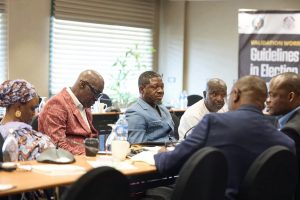
Comments 0