Regional consultation urges stronger, inclusive and continuous civic engagement across Liberia
BUCHANAN, Grand Bassa County, 6 October 2026
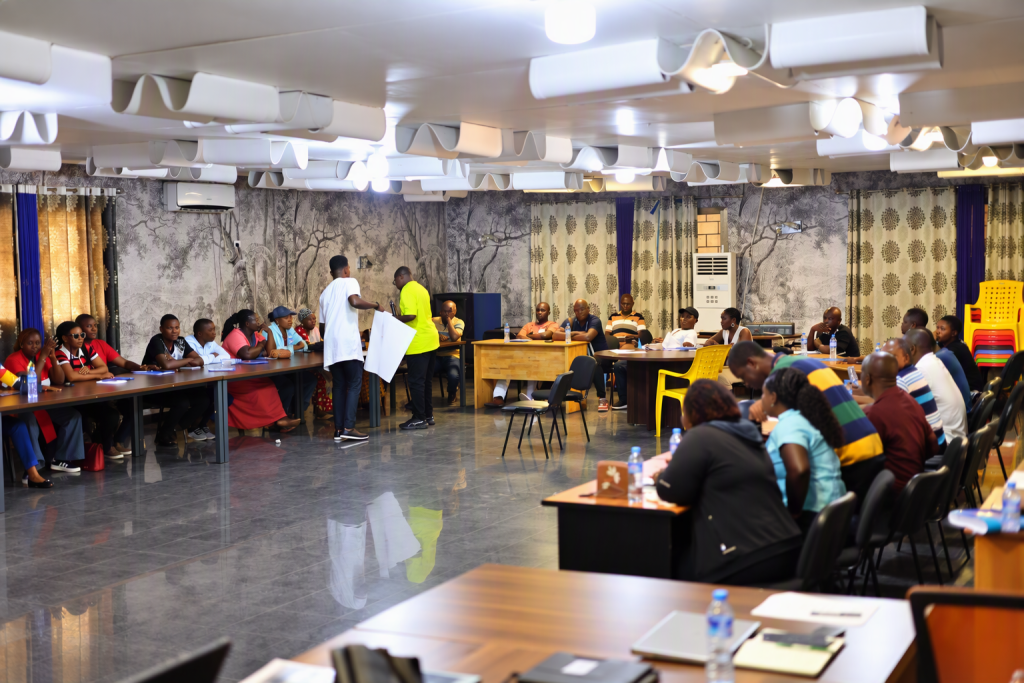
Representatives from four southeastern and central counties have called on the National Elections Commission of Liberia, NEC, to transform Civic and Voter Education, CVE, from an election-focused activity into a continuous, inclusive and citizen-centered process that operates throughout Liberia’s electoral cycle.
The call was contained in a resolution unanimously adopted on Tuesday, 6 October 2026, following the first regional consultation on the draft NEC Civic and Voter Education Strategy 2026 to 2030 held in Buchanan, Grand Bassa County.
Representatives from Grand Bassa, Margibi, Rivercess and Sinoe said sustained civic and voter education is essential to ensuring that citizens receive accurate, timely and understandable information long before an election begins and after ballots have been cast.
Participants identified inadequate human, financial and logistical resources as major obstacles that could limit the reach and effectiveness of CVE programmes, particularly in communities where access to information remains difficult.
Limited outreach to rural and underserved communities was also identified as a concern, with attendees emphasizing the need for programmes that recognize local realities, language differences, literacy levels and the diverse ways citizens receive information.
Representatives further called for stronger engagement of women, young people, first time voters, persons with disabilities and other marginalized groups, stressing that meaningful participation in democracy requires citizens to be informed and included throughout the electoral process.
To strengthen implementation, representatives recommended that NEC institutionalize CVE as a year-round electoral cycle intervention, supported by annual workplans, dedicated budgets and clear responsibilities at national, county and community levels.
They also urged NEC to professionalize its CVE staffing structure by expanding county level capacity, providing regular training and establishing Training of Trainers programmes that can strengthen the skills of facilitators working directly with communities.
The participants recommended standardized CVE curricula, materials and facilitation guides to ensure that civic and voter education messages remain accurate, consistent and accessible while still allowing programmes to respond to local community needs.
Representatives called for a National CVE Partnership Framework that would bring together government institutions, civil society organizations, political parties, media institutions, schools and universities, religious and traditional leaders, youth and women’s organizations, professional bodies and transport unions.
Expanding community outreach was also identified as a priority, with recommendations for greater use of radio, community meetings, social media, local language programming, jingles, town criers and religious platforms to reach citizens across different communities and information environments.
The representatives placed particular emphasis on confronting misinformation and disinformation, calling for stronger public information systems, closer engagement with media institutions and communication mechanisms capable of helping citizens distinguish credible electoral information from misleading or false content.
Representatives also recommended integrating civic and voter education into schools and universities through relevant curricula, CVE clubs, teacher training, research and evidence generation, with the aim of building democratic awareness among young people before they become active voters.
For long-term sustainability, the resolution called for a fully costed CVE Strategy and annual budgets covering national, county and community interventions, supported by government allocations and partnerships with development partners, civil society organizations and other partners.
A stronger Monitoring, Evaluation and Learning framework was also recommended to measure results through clear indicators, field monitoring, surveys, focus group discussions and citizen feedback mechanisms, allowing NEC and its partners to identify gaps and improve future interventions.
Representatives emphasized that every Liberian should have access to civic and voter information that is timely, accurate, relevant and easy to understand, enabling citizens to participate meaningfully in democratic governance not only on Election Day, but throughout the electoral cycle.
Speaking on behalf of the NEC Board of Commissioners, Commissioner Cllr. Ernestine Morgan Awar commended attendees for their contributions and thanked the UNDP Liberia Electoral Support Project, LESP, for its continued support to the Commission’s civic and voter education efforts.
Commissioner Awar reaffirmed NEC’s commitment to strengthening and expanding civic and voter education across Liberia, with particular attention to reaching citizens consistently and ensuring that communities are not left without reliable information between elections.
During the two-day consultation, presentations on key electoral and institutional reforms were delivered by NEC Deputy Executive Director for External Relations, Mr. Samuel B. Cole, UNDP LESP’s Robert Irish, and representatives from NEC’s Civic and Voter Education, Communications and Gender Sections.
Representatives adopted the resolution in Buchanan, Grand Bassa County, on 6 October 2026, bringing the first phase of the regional consultation to a close while setting out practical priorities for the development and implementation of the 2026 to 2030 CVE Strategy.
Meanwhile, the second phase of the Regional CVE Strategy Consultation is scheduled for Robertsport, Grand Cape Mount County, from 8 to 9 October 2026, where additional representatives are expected to contribute perspectives toward strengthening Liberia’s national civic and voter education framework.
The consultation is being implemented by NEC Liberia in partnership with the UNDP Liberia Electoral Support Project (LESP, with support from the European Union in Liberia, the Embassy of Sweden in Monrovia, and Ireland.
#
Related Articles
COMMISSIONERS JOIN GLOBAL ELECTION LEADERS AT A-WEB CONFERENCE IN THE PHILIPPINES
Oct 15, 2026
NEC Liberia, UN Women Advance Gender and Disability Inclusion Through Staff Training
Oct 14, 2026
BEYOND THE BALLOT: NEC LIBERIA EXPLORES AI-DRIVEN SOLUTIONS TO ELECTORAL CHALLENGES
Oct 14, 2026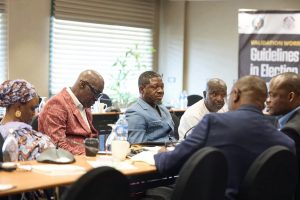
Comments 0